
Dental conditions
Toothache
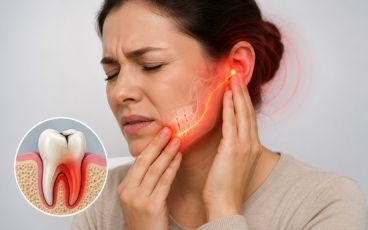
Toothache is your tooth telling you something has changed. The kind of pain you have is a useful clue, so this page explains what it can mean, how to ease it, and when to come in.
Also called: dental pain, pulpitis

Sound familiar?
- A sharp twinge with hot or cold food and drinks
- A dull ache that comes and goes
- Throbbing pain that's keeping you awake
- Pain when you bite down
- An ache in your upper back teeth when you have a cold
What's usually behind it
Decay, a cracked tooth, a lost or broken filling, gum problems, an abscess, wisdom teeth coming through, and grinding can all cause toothache. Upper back teeth can also ache when your sinuses are blocked, because their roots sit close to the sinus.
What your pain can mean
| What you notice | What it can mean |
|---|---|
| A quick twinge with cold that fades in seconds | Often sensitivity or early decay |
| Pain that lingers after hot or cold | The nerve inside the tooth may be inflamed |
| Sharp pain when biting | Possibly a crack or a problem filling |
| Throbbing pain that keeps you awake | Possible infection. Book in soon |
| An ache in several upper teeth with a blocked nose | Possibly your sinuses |
A quick twinge with cold that fades in seconds
What it can meanOften sensitivity or early decay
Pain that lingers after hot or cold
What it can meanThe nerve inside the tooth may be inflamed
Sharp pain when biting
What it can meanPossibly a crack or a problem filling
Throbbing pain that keeps you awake
What it can meanPossible infection. Book in soon
An ache in several upper teeth with a blocked nose
What it can meanPossibly your sinuses
What you can do at home
- Take over-the-counter pain relief if needed, following the directions on the pack
- Rinse with warm salt water
- Hold a cold compress against the outside of your cheek
- Avoid very hot, cold or sweet food on that side
- Floss gently around the tooth in case food is trapped
- Don't put aspirin or anything else directly on your gum
When to see a dentist
- Pain that lasts more than a day or two
- Pain that keeps you awake or needs regular pain relief
- Swelling in your gum or face, or a fever
- Pain after a knock to the mouth
- If swelling spreads to your eye or neck, or you have trouble swallowing or breathing, go to your nearest emergency department or call 000.
How we help at Nest
We'll find the cause first, with an examination and X-rays, and explain what we've found in plain language. Then we'll talk through your options and costs before anything starts. Treatment might be a filling, a crown, root canal treatment or, if a tooth can't be saved, removing it. If you're in pain, call us on 02 9436 1874 and we'll see you as soon as we can.
Common questions
Related
Tooth abscess
Also called: periapical abscess, dental abscess
Throbbing pain, a pimple on the gum or swelling. An infection that needs treatment to settle.
Learn moreSensitive teeth
Also called: dentine hypersensitivity
A twinge from cold drinks or sweet food, and what's usually causing it.
Learn moreChipped or cracked tooth
Also called: cracked tooth syndrome
A broken edge, or a sharp twinge when you bite that disappears as quickly as it came.
Learn moreTalk it through with us
We'll look at what's going on, explain your options and costs before anything starts.
Reviewed by Dr Viki Karassellos, Dentist, Nest Dental. Last reviewed September 2026. This page is general information, not a diagnosis. Please see a dentist about your own situation.