
Dental conditions
Bleeding gums
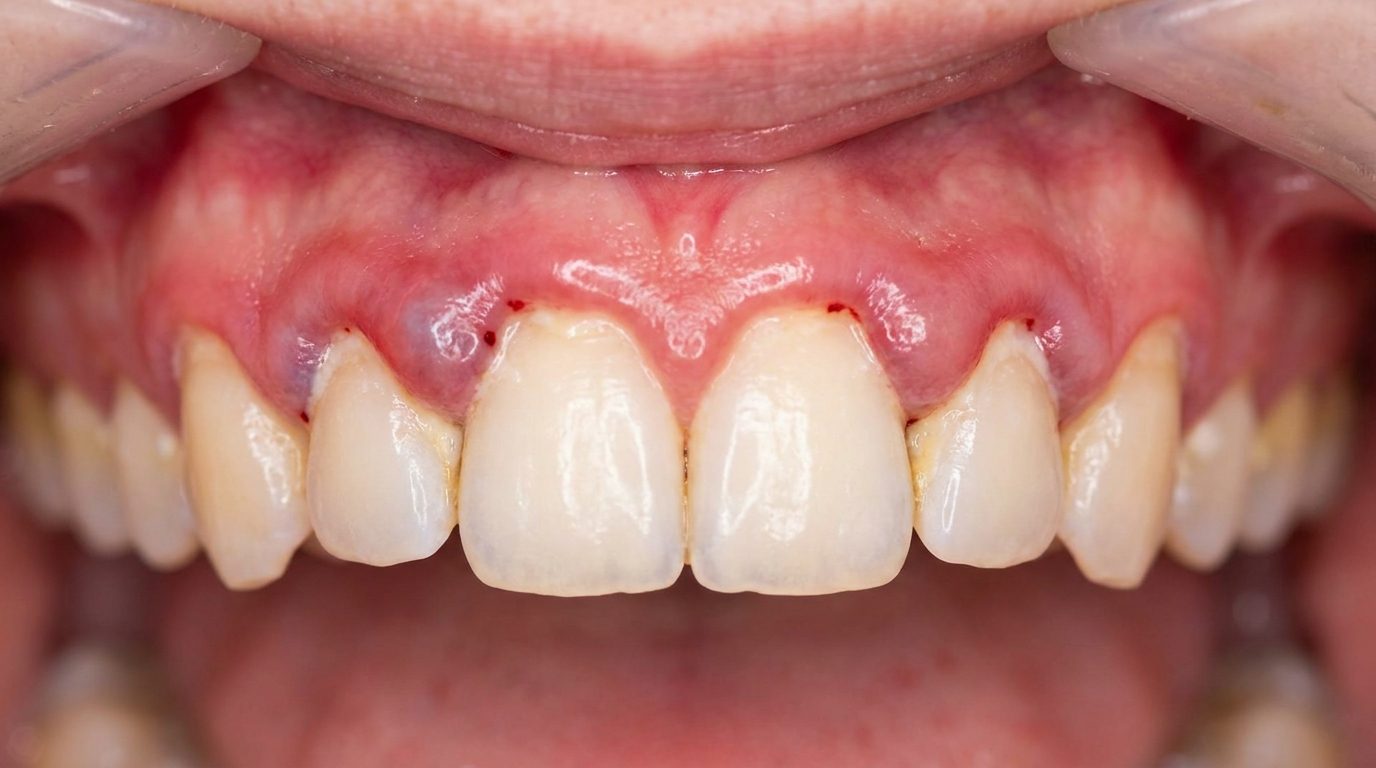
Healthy gums don't bleed. Pink in the sink after brushing is often the first sign of gum disease, and at this early stage it can usually be turned around.
Also called: gingivitis, gum disease, periodontitis
Sound familiar?
- Pink or red when you brush, floss or spit
- Red, puffy or tender gums
- Bad breath or a bad taste that won't shift
- Gums that look like they're pulling back
- Teeth that feel loose or have started to move
- New gaps appearing between teeth
What's usually behind it
Plaque that sits along the gumline irritates your gums and makes them bleed. This early stage is called gingivitis, and it can be reversed. If plaque and tartar stay there, the infection can move deeper: gums pull away from the teeth, pockets form, and the bone holding your teeth in place is slowly lost. This is periodontitis. The damage can't be undone, but it can be managed. Smoking, diabetes, pregnancy, some medications, stress and family history all increase the risk.
What you can do at home
- Keep brushing and cleaning between your teeth, gently. Don't stop because your gums bleed
- Use a soft toothbrush, angled towards the gumline
- Floss or use interdental brushes once a day
- With good cleaning, bleeding from gingivitis often improves within a couple of weeks
When to see a dentist
- Bleeding that continues after two weeks of good cleaning
- Gums that are receding or teeth that feel loose
- Bad breath that won't go away
- You're pregnant, as gums are more prone to bleeding during pregnancy
- You have diabetes, which is closely linked with gum health
How we help at Nest
We'll check your gums properly, including measuring the space between your gums and teeth, and take X-rays if needed to check the bone. Early gum disease is usually treated with a professional clean and better home care. For periodontitis, we clean deeper below the gumline and set up regular maintenance visits to keep it stable. Dr Diana Arcila leads gum care at Nest. We'll explain what we've found and your options and costs before anything starts.
The clinical side
The clinical sideAdvanced periodontitis and gum disease in younger adults
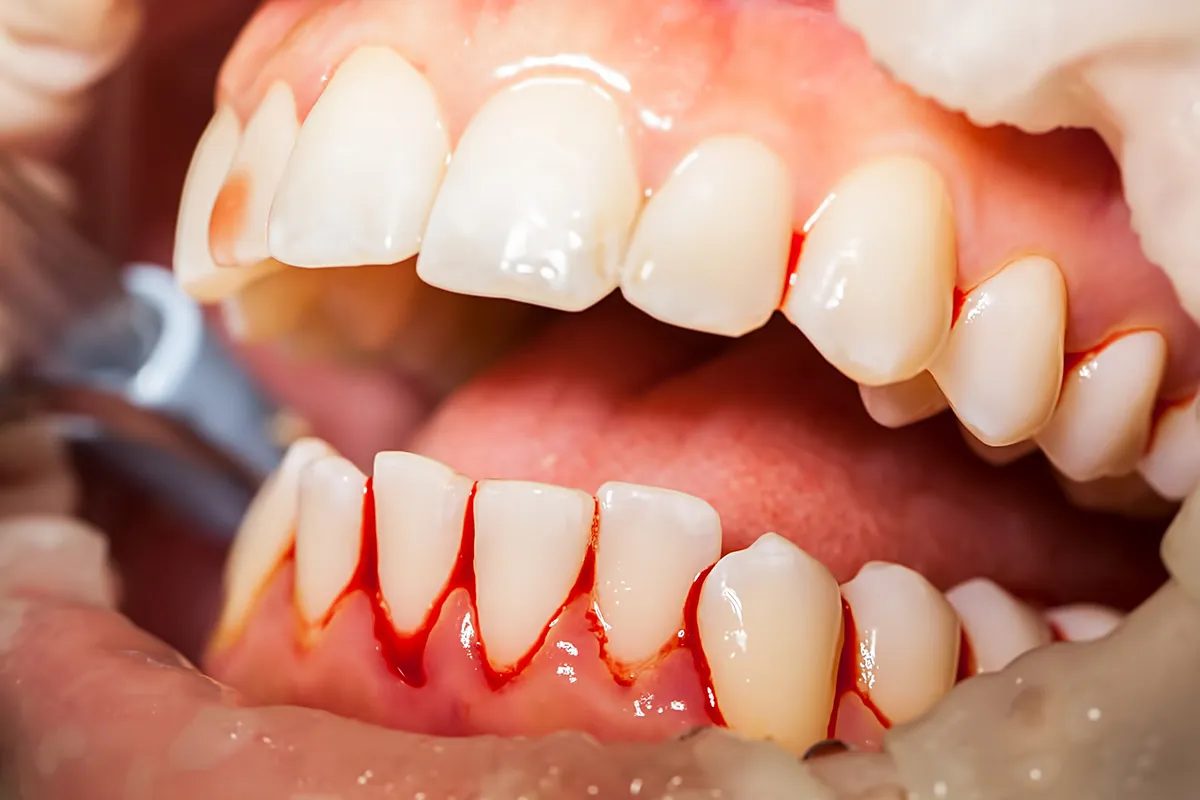
Advanced periodontitis involves significant loss of the bone supporting the teeth, deep pockets between gums and teeth, and sometimes loose or drifting teeth. Treatment focuses on removing bacteria from the root surfaces below the gum and keeping the disease stable with regular maintenance. Some younger adults develop gum disease that progresses faster than usual, often with a family history. This was once called aggressive periodontitis. Today it's described by stage and grade, and it benefits from early diagnosis and closer monitoring.
Common questions
Related
Bad breath
Also called: halitosis
Breath that won't freshen up usually starts in the mouth. Here's how to find the source.
Learn moreSensitive teeth
Also called: dentine hypersensitivity
A twinge from cold drinks or sweet food, and what's usually causing it.
Learn moreMissing teeth
Also called: tooth loss
Implants, bridges or dentures, and what happens if you leave a gap.
Learn moreTalk it through with us
We'll look at what's going on, explain your options and costs before anything starts.
Reviewed by Dr Viki Karassellos, Dentist, Nest Dental. Last reviewed September 2026. This page is general information, not a diagnosis. Please see a dentist about your own situation.